Energy Management enables further electrification at HN Post & Zonen
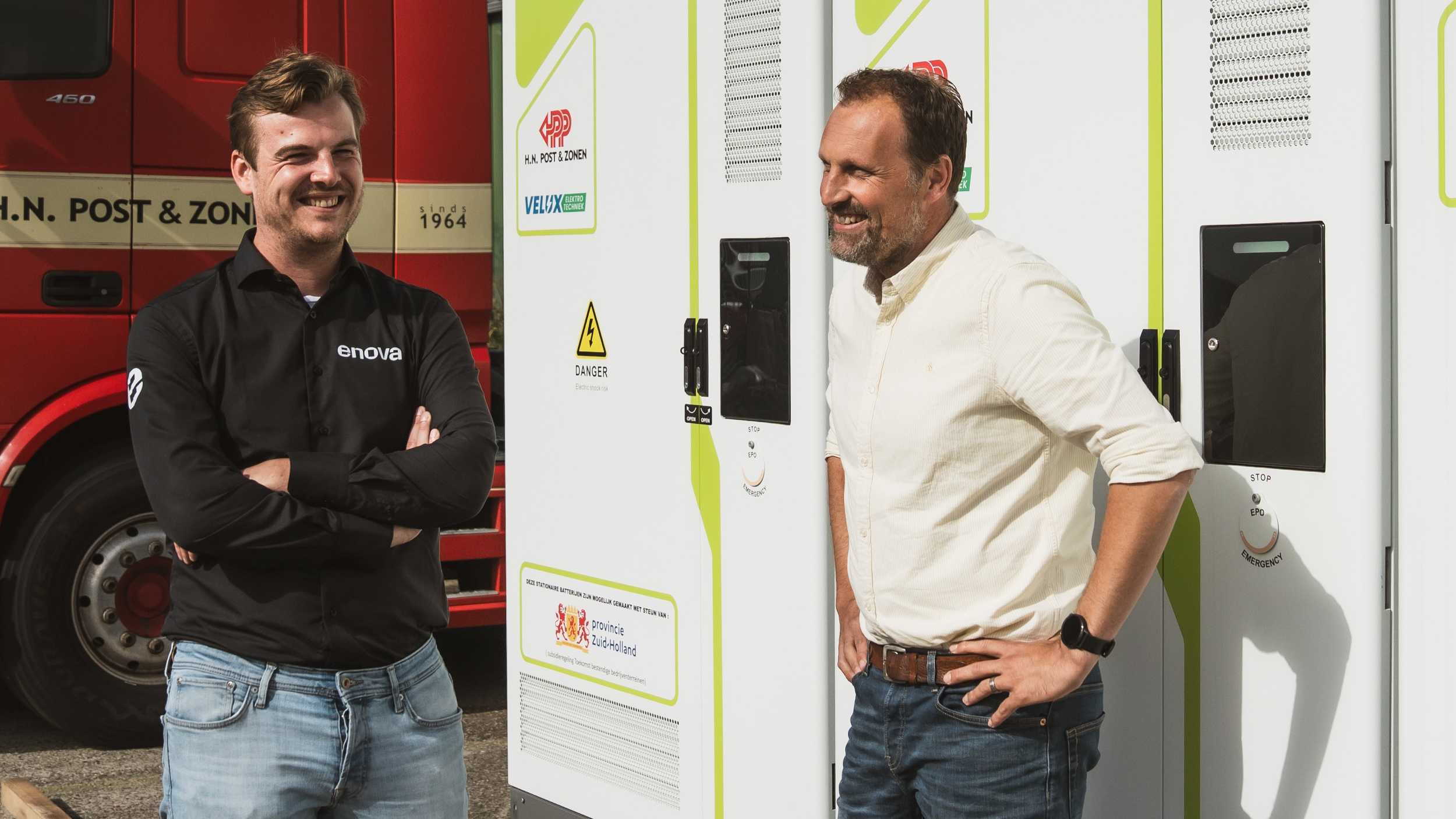
Electric trucks, charging stations and a battery are making HN Post & Zonen’s energy management increasingly dynamic. At the same time, logistics operations continue as normal and the capacity of the grid connection is limited. Through integrated energy management, Enova ensures that the best decisions are consistently made and implemented. The result: lower energy costs, additional revenue from flexibility and, above all, scope to further electrify the vehicle fleet.
From pioneer to market leader
HN Post & Zonen has been operating as a logistics service provider since 1964, offering a wide range of services: transport, storage and transhipment, freight forwarding and customs facilities for a broad client base. “We handle a lot of container transport of building materials, have tankers and specialise in the groupage transport of horticultural products from nurseries to auctions and to flower and plant exporters,” explains Dé Post, a representative of the third generation now at the helm.
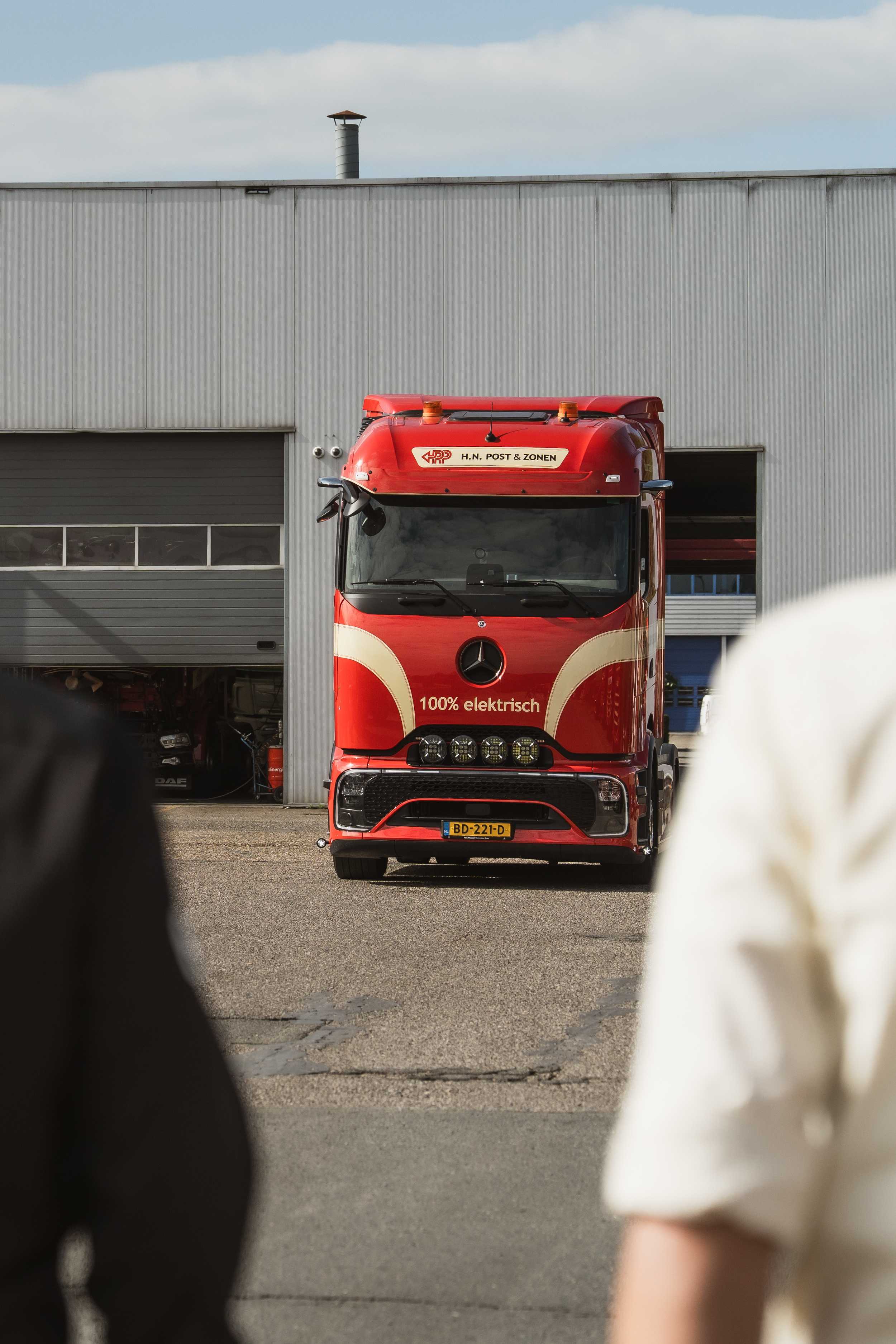
The versatile fleet currently comprises over 170 vehicles, 17 of which are electric. “We put our first electric lorry into service in 2021,” continues Post. “It was used, amongst other things, for our client Plus Supermarkets and had only a short range, but it worked. The customer was pleased with it too, as reducing CO₂ and particulate matter emissions in urban areas is becoming an increasingly important issue.”
Responding to the wishes of customers and society, the transport company, which employs more than 200 people, has since made significant strides towards becoming more sustainable. An important step followed in 2024: a larger grid connection and the development of its first charging hub, featuring a charging station with four charging points and the capacity to serve multiple vehicles.
"Electric trucks are considerably more expensive to buy than diesel trucks, but if you can secure a good electricity tariff, you’ll recoup some of that cost for every kilometre driven"
Electrification within the same grid connection
‘We are continuing with the electrification of our fleet, but of course we also want to maintain sufficient control over costs. Electric lorries are considerably more expensive to buy than diesel lorries, but if you can secure a good electricity price, you’ll recoup some of that cost with every kilometre driven,’ says Post.
The challenge extends beyond just the price of electricity. More electric lorries and charging points also mean greater demand for power, more instances where energy needs to be purchased and, ultimately, a greater strain on the available grid connection. To get help with this, Post contacted battery manufacturer Battiq. “They also put us in touch with Enova, a specialist in integrated energy management. We sat down together and this resulted in the purchase of a battery with a storage capacity of 2 MWh and a power output of 1 MW,” explains Post. “The calculations showed that we would achieve a payback period of around four years, which is better than we had initially thought.”
Achieving results by consistently making the right choices
As HN Post & Zonen continues to electrify its operations, the number of energy-related decisions also increases. When should you purchase electricity? When should you use or store self-generated energy? When should you use the battery for the charging hub, for imbalance or for aFRR? And what impact does each decision have on energy costs, grid management costs and the available capacity at the connection point?
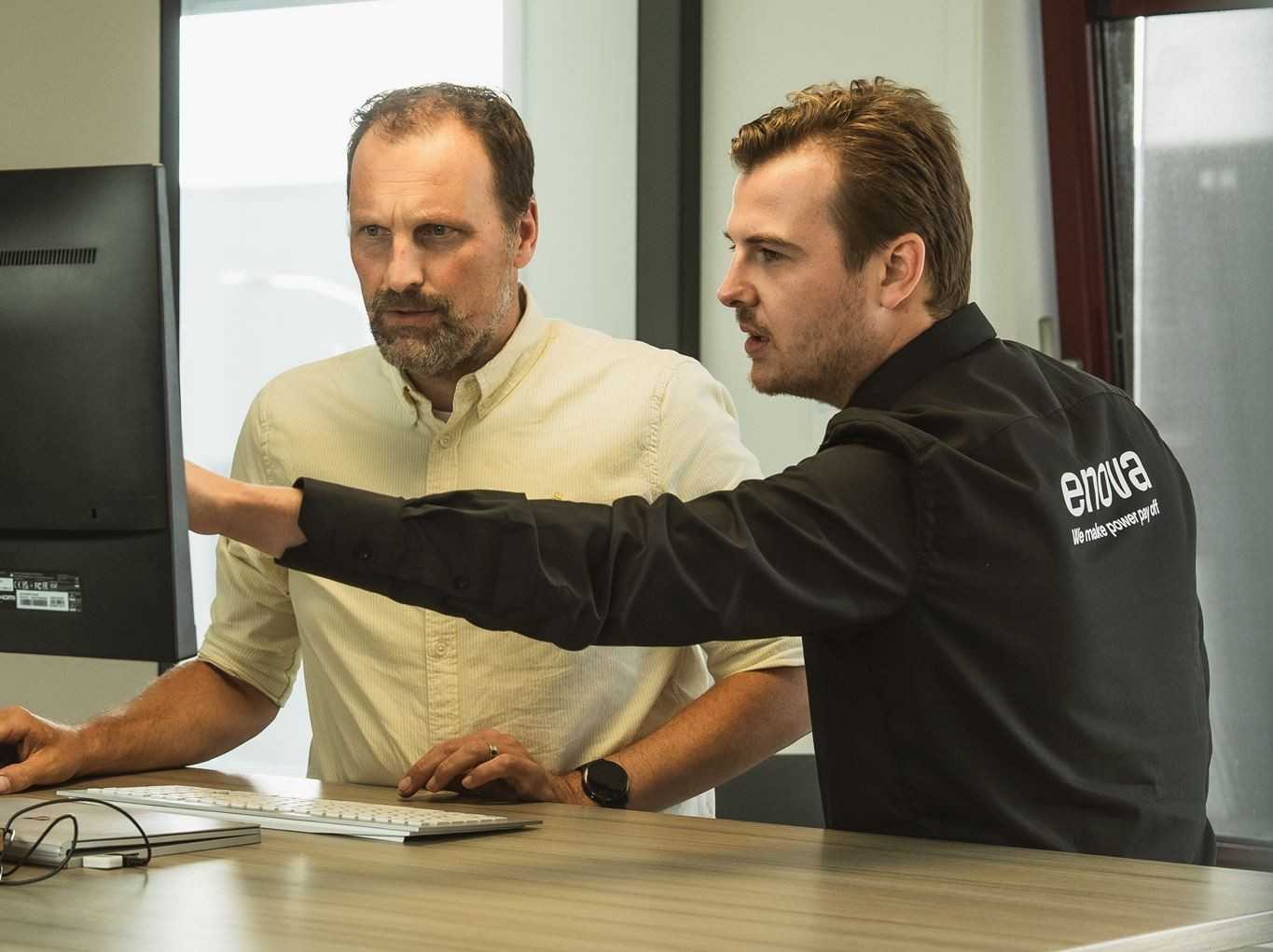
Enova makes these assessments continuously and holistically. Generation, consumption, storage, charging requirements, grid capacity and the various energy markets are viewed as a single entity. Within the constraints of the logistics operation, the energy manager determines and implements whichever approach delivers the greatest value at that moment.
“The battery can create value in various ways at any given moment,” explains energy manager Frans Kirpestein. “So the question is not just when to charge or discharge, but where the available energy and flexibility deliver the most value at that moment. We make that choice and implement it continuously.”
Post is already seeing the benefits of this. “By 2026 alone, the price per kWh will have fallen by an average of 20 cents. That adds up quickly as our electric vehicle fleet continues to grow and we continue to make good use of our charging stations. In addition, we have generated revenue by making the battery available to TenneT for grid stabilisation on the aFRR. A smart charging strategy for the fleet is also needed to maximise returns. Enova is helping us with that too.”
Kirpestein emphasises that energy management is not a one-off optimisation exercise: “Prices, markets, charging requirements and available capacity at the connection point are constantly changing. Our team and our technology monitor these changes and make adjustments where necessary. This means the company doesn’t have to manage that complexity itself, and we can consistently make the best choice. There’s a whole team of experts behind it, who are constantly optimising, innovating and improving, and keeping up with new developments. That’s how we consistently achieve the best results for our customers."
"The question is not just when to charge or discharge, but where the available energy and flexibility will deliver the most value at that moment."
Space to grow
Meanwhile, HN Post & Zonen is continuing its greening efforts unabated. At the end of September 2026, a second charging hub with eight charging points will be added, bringing the total to twelve. Further expansion to around 40 charging points is already planned, due to the ongoing transition to fully electric transport. This will not only increase electricity consumption but, more importantly, present the challenge of fitting all charging operations within the available grid capacity.
“Whenever a lorry is purchased or replaced, we first look at an electric variant,” explains Post. “The range of modern e-lorries is around 500 km, based on a 600 kWh battery. We expect this capacity to rise to around 800 kWh in the coming years. That fits perfectly with our business situation: we mainly operate domestically, particularly in the western Netherlands,” concludes Post. It goes beyond simply reducing energy costs. The company utilises its battery and grid connection to reduce costs, generate new revenue and create scope for further electrification.
By consistently making and implementing the right energy choices, Enova HN helps Post en Zonen to derive greater value from energy today whilst simultaneously expanding the possibilities for tomorrow.
Ready to explore intelligent energy management?
Get no-obligation advice on the possibilities for your business. Get in touch with our specialists.
Interested in discussing the electrification of your logistics business?
Tell us who you are and we'll be in touch.